Marine Creatures Clipart – 43 Designs
A Designer’s First Look: Clean, Calm, and Ready for Stitching
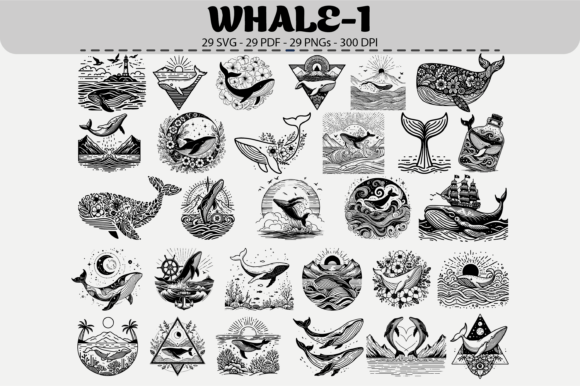
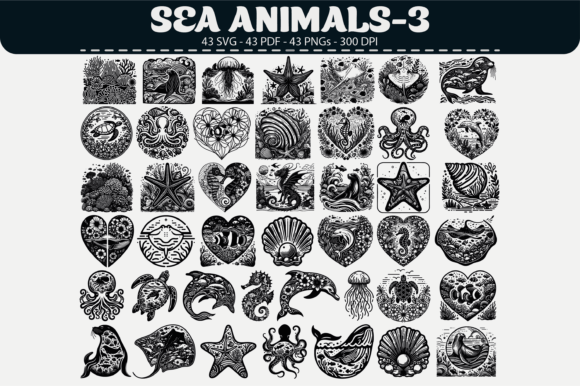
Opening Marine Creatures Clipart – 43 Designs, I felt an immediate sense of quiet intention—no frantic outlines or over-rendered details, just confident, balanced silhouettes of seahorses, octopuses, jellyfish, starfish, whales, and coral motifs. These aren’t cartoonish or overly stylized; they’re illustrative but purpose-built for embroidery. The black-and-white line work feels intentional—not just “printable,” but *stitchable*. As a designer who’s spent years prepping files for commercial embroidery, that distinction matters. This set doesn’t scream “cute nursery wall art” first—it whispers “custom embroidered tote bag,” “subtle baby onesie motif,” or “elegant kitchen towel monogram accent.” That’s where it earns trust.
Real Project Test: A Hand-Embroidered Tote for a Coastal Boutique
Last week, I used three designs from Marine Creatures Clipart – 43 Designs on a natural linen tote for a local boutique launching a summer collection. I chose the minimalist stingray, a small sea turtle, and a delicate anemone—each under 3.5 inches wide. They stitched cleanly on medium-weight fabric with light tear-away stabilizer. No skipped stitches, no thread nesting, and the clean lines translated beautifully into satin stitch borders and smooth fill areas. Customers responded strongly—not to “how cute,” but to “how *thoughtful* it looks.” That’s the difference between decoration and design: these marine motifs feel curated, not clip-art-generic. They elevate the handmade product without overwhelming it.
Where It Shines (and Where to Pause)
Marine Creatures Clipart – 43 Designs works especially well for:
- Custom apparel—especially sweatshirts and structured tees where bold, uncluttered shapes hold up at 4–5 inches;
- Baby embroidery—the gentle curves and open negative space avoid harsh edges, ideal for onesies and burp cloths;
- Embroidered patches—clean outlines mean crisp cut edges and easy peel-away backing;
- Kitchen and nursery textiles—tea towels, pillow covers, and crib sheets benefit from the organic rhythm and subtle scale variation across the set;
- Etsy listings and craft fair merchandise—these designs read well in digital mockups and translate reliably across product photos.
But—and this is key—don’t assume all 43 will behave the same on every surface. For caps or curved garments, test the more intricate pieces (like the detailed octopus tentacles or clustered coral) first. On thin or stretchy fabric, avoid the densest fill-stitch versions unless you reinforce with cutaway stabilizer. And on dark fabric? Run a quick black-and-white mockup: some fine-line elements may need slight stroke-weight adjustment before digitizing to ensure visibility after stitching.
What You’ll Notice After the First Stitch
These aren’t just graphics—they’re design assets with visual weight and consistency. The uniform line quality means your holiday embroidery, personalized gift, or boutique branding stays cohesive across products. I’ve seen too many clipart sets where one whale looks hand-drawn and the next looks traced from a stock photo—Marine Creatures Clipart – 43 Designs avoids that whiplash. That consistency builds customer trust: when someone buys your embroidered apron and later sees the same sea turtle on your Instagram story or Etsy banner, it reads as intentional brand language—not a grab-bag of random icons.
Practical Notes Every Embroidery Designer Should Keep Handy
Before committing to a client project or bulk production, do this:
- Test on scrap fabric first—especially if using textured weaves like burlap or terry cloth;
- Check thread color contrast early—some motifs rely on shape alone, so light thread on light fabric can disappear;
- Review stitch density manually if digitizing yourself—avoid overly tight fills in small areas (like fish eyes or barnacle clusters); they’ll pucker;
- Confirm hoop size compatibility—a few of the wider compositions (like the full-length whale or reef scene) may require a 5x7 hoop minimum;
- Inspect small details at actual stitch size—what reads clearly at 200% zoom may vanish at 1.5x scaling;
- Use proper stabilizer—lightweight cutaway for knits, tear-away for stable wovens, and mesh for sheer fabrics;
- Verify licensing—since this is a digital download, confirm whether your intended use (e.g., selling finished embroidered patches or bundling into a digital embroidery file pack) falls within permitted commercial terms.
Fitting Into Your Creative Workflow
As an Illustrations set, Marine Creatures Clipart – 43 Designs sits comfortably between pure vector art and ready-to-embroider files. You’ll need to digitize for machine embroidery design use—but that’s where your control shines. Want softer edges? Adjust satin stitch width. Prefer a hand-drawn texture? Add subtle running stitch overlays. Need it scaled for baby embroidery? The SVG and PDF formats give you precision without pixelation. It’s flexible enough for a hobbyist embroidering a holiday gift and sharp enough for a small shop producing custom apparel at scale.
Final Thought: Not Just Sea Life—It’s Design Confidence
This isn’t about filling a blank hoop with “something ocean-themed.” It’s about choosing a motif that supports your voice as a maker. When your customer runs their fingers over a perfectly stitched seahorse on a linen napkin—or sees that same motif repeated thoughtfully across your packaging, website, and social feed—they’re not just buying a product. They’re connecting with care, clarity, and consistency. Marine Creatures Clipart – 43 Designs delivers that foundation. It’s quiet, capable, and quietly professional—exactly what a craft business, Etsy seller, or embroidery designer needs when every stitch represents their reputation.