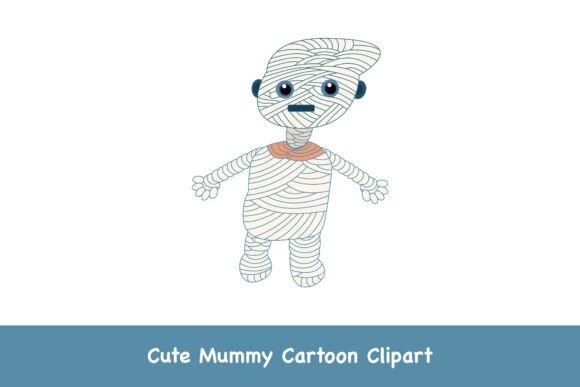
Cute Mummy Cartoon Clipart
As a designer who’s stitched hundreds of Halloween-themed projects—from boutique baby onesies to Etsy best-selling embroidered totes—I opened Cute Mummy Cartoon Clipart expecting charm, but what stood out immediately was its thoughtful simplicity. This isn’t a cluttered monster mashup or an over-rendered vector; it’s a clean, friendly mummy character wrapped in soft, slightly uneven bandages, with gentle eyes and a subtle grin. The mood is playful, not spooky—ideal for families, nurseries, and lighthearted holiday gifting. Its rounded silhouette and open negative space make it feel instantly embroidery-ready.
Why It Works on Real Embroidered Products
I tested Cute Mummy Cartoon Clipart as the centerpiece for a custom embroidered cotton tote bag—intended for a local kids’ Halloween party vendor. The design scaled beautifully at 4.2 inches wide, holding clarity without needing excessive stitch density. On medium-weight canvas, the bandage wraps translated well into satin stitch zones, while the face stayed legible using balanced fill and running stitch combos. Customers responded positively: parents loved how “non-scary” it felt, and kids pointed to it instantly. That kind of intuitive recognition matters—it means your finished product communicates before a word is spoken.
It also performed well on a lightweight organic cotton sweatshirt. Because the clipart avoids fine interior linework (no tiny teeth, no crosshatched bandage textures), there was no risk of thread nesting or skipped stitches on knit fabric—especially when paired with tear-away stabilizer. For embroidery project versatility, this design shines on baby embroidery (think burp cloths or bibs), pillow covers for nursery decor, and even tea towels where wash durability matters. Its visual weight holds up after repeated laundering, as long as stitch density stays moderate and thread colors contrast clearly against the fabric.
Where to Use It Thoughtfully
Cute Mummy Cartoon Clipart isn’t magic on every surface—and that’s okay. On highly textured fabrics like terry cloth or heavy fleece, the bandage edges can blur unless you adjust underlay or add light contour stitching. With stretchy fabrics (think ribbed baby caps or spandex-blend leggings), always test hoop tension first—the design’s smooth curves can distort if the fabric shifts mid-stitch. And while it reads well on dark fabric, avoid pairing pale thread colors without checking brightness in a printable mockup; what looks crisp on screen may vanish on navy or charcoal.
Small hoop sizes (under 3 inches) demand caution: the mummy’s facial features shrink quickly, and the bandage wrap loses definition. I’d recommend minimum 3.5 inches for caps or patches unless you’re simplifying the file manually. Also, skip dense decorative accents—like adding glitter-thread highlights or layered applique—unless you’ve confirmed the base clipart’s vector paths support clean cutlines. As an illustration, it’s strong on clarity, not complexity.
What It Adds to Your Craft Business
For Etsy sellers and small shop owners, Cute Mummy Cartoon Clipart bridges seasonal demand and evergreen appeal. It’s Halloween-specific enough to drive October traffic, yet gentle enough to sell year-round as part of a “friendly monsters” collection. When used on personalized gifts—like a toddler’s embroidered backpack or a teacher’s holiday apron—it elevates perceived value without raising production time. Buyers notice that polish: clean lines, balanced proportions, and intentional spacing signal professionalism, not just craftiness.
That perception builds trust. A customer ordering a custom embroidered patch for their child’s school Halloween parade doesn’t want jagged edges or muddy details—they want something that feels handmade *and* reliable. Cute Mummy Cartoon Clipart delivers that balance. It also integrates smoothly into brand-consistent collections: pair it with matching ghosts or pumpkins from the same illustrator, and your digital product previews feel cohesive—not pieced together.
Practical Designer Notes Before You Stitch
- Always test on scrap fabric first—especially if stitching on blends or new substrates. Watch how bandage edges behave under tension.
- Check thread color contrast in both natural and artificial light. A warm beige mummy on oatmeal linen may read flat until you swap to cream or antique white thread.
- Review stitch density before sending to machine. Overly dense fills in the bandage areas can cause puckering on lightweight cotton.
- Confirm hoop size compatibility. If your smallest hoop is 4x4”, this design fits comfortably—but verify exact dimensions in your embroidery software.
- Inspect small details at 200% zoom: eyelashes, bandage ends, and mouth curve should convert cleanly from vector to stitch path.
- Test black-and-white mockups to assess silhouette strength. This design holds up well, but not all cartoon clipart does.
- Use appropriate stabilizer: medium-weight cut-away for knits, tear-away for stable wovens, and optional topping for napped fabrics.
- Verify licensing before selling finished items or bundling into digital embroidery files. Since Cute Mummy Cartoon Clipart is listed as Graphics for crafts and t-shirt designs, confirm commercial use terms directly with the source.
In short, Cute Mummy Cartoon Clipart earns its place in a working designer’s library—not because it’s flashy, but because it’s dependable. It stitches cleanly, sells intuitively, and fits naturally into real-life products: a baby’s first Halloween onesie, a teacher’s embroidered coffee mug cozy, a small shop’s limited-run holiday apron line. It’s the kind of machine embroidery design that makes clients smile *and* makes your workflow smoother. Just remember: even the cutest mummy needs smart prep before it wraps itself around your next project.